Jahangir's World Times First Comprehensive Magazine for students/teachers of competitive exams and general readers as well.
ANTAGONISTIC ECONOMIES
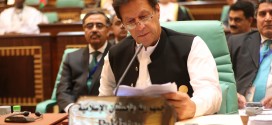
Recep Tayyip Erdogan’s ruling Justice and Development Party might have felt a little less impressive victory in 2011 than that in the elections of 2007. On the other hand, a dictatorially mutilated Pakistan along with the faint wave of democratisation in 2008 alongside a faltering economy also encountered the open-ended foreign policy of the 11-year-old centre-right conservative AKP. The Turkish leader in his second joint session of Pakistani parliament was cognizant of the hostile political environment prevailing in Pakistan. This was the reason why he stressed upon ‘political consensus’ and the role of a ‘constructive opposition’.
While linking both these politically mature traits with economic progress, he ensured Turkey’s support for ‘fighting terrorism’. Pakistan and Turkey are standing shoulder-to-shoulder in order to curb terrorism. Strategic and political ties are strengthening, but economic relation between the two seems to be inversely proportional to each other. For Pakistan’s gross domestic product growth is decreasing whereas Turkey is witnessing an increase in the GDP growth (+9%).
The rise in inflation in Pakistan is followed by a decline in inflation in Turkey. Despite this fact, the Turkish premier expressed his desire for a joint investment during his recent visit to Pakistan.
The recent agreements signed between the government of Punjab and Turkish companies have opened up a new channel for the economic cooperation. Turkey’s ability to construct some of the finest dams in the world is not being considered in comparison to Pakistan’s hydro-electric potential. Focus is inclined’ towards projects like solid-waste management, transport and communications, which tend to benefit the investor.
Being a friend of a democratic Pakistan, and at the same time being the integral part of NATO, Erdogan had supported the resumption of NATO supplies after the November 26 attack on Salala check post, that is contrary to the aspirations of the masses and stance adopted by Pakistan’s foreign office after the attack which claimed the life of 24 Pakistani soldiers.
His mention of the withdrawal of American troops from Afghanistan by 2014 called for an Afghan-led and Afghan-owned Afghanistan without any allusion towards stability in the border regions of Pakistan. In a competitive international stage, the progress of countries is measured by their economic stability and prosperity. Bilateral ties that are governed by soft-power exchange may strengthen the bond between two states, but cut at the roots of symbiotic economic cooperation which as in the case of Pakistan and Turkey has led to ‘one nation, two states but antagonistic economies’.