Jahangir's World Times First Comprehensive Magazine for students/teachers of competitive exams and general readers as well.

PROFITS OF JURISPRUDENCE.
Jurisprudence is a double-edged sword. It is difficult for the tongue and mind. Younger lot is troubled pronouncing it and older ones are burdened grasping it. Even experts are at pains to simplify it. When an authority on the subject like Michael Freeman is asked what it encompasses, he painfully admits of the old adage that there are as many answers as one may think. It is, thus, no surprise that the subject is vast and its explanation has variants. And there have been many attempts to come to grips with this abstract-at-first and exciting-at-later-stage discipline, and the process is ongoing. Its proper understanding, however, comes from either getting involved in the subject by going to its deeper meaning or by looking at it as a package of questions as opposed to package of theories. Both require hardcore commitment to eliminating factors that impair understanding and dampen desire to learn more.
There are different ways in which jurisprudence has been explained but the most enlightening ones are origin-based, result-based and depth-based approaches. Those who explain it from the etymological dimension (origin-based approach) typically break it down into its two Latin components as juris meaning legal and prudence meaning skill; together meaning legal skill. This approach is advocated by Wayne Morrison, the author of ‘Jurisprudence from Greeks to Post-modernism’, who refined it as a process in legal skill. This means it trains the mind to think legally as opposed to emotional, religious or cultural thinking (which becomes natural part of the thinking process if it is left unattended). It also means that it achieves this mental development in stages and gives productivity to sustained effort alone. Its first stage requires identification of mind games, which is knowledge of the factors that influence decision-making but keep people under the disguise that their decisions are pure and uninfluenced. These may range from parenting to schooling to culture. Its second stage requires acceptance of mind games, which is to come to terms with oneself that decisions can be fallible if they are subjectively influenced. For example, the Jewish belief-system which restricts people from using Facebook may be a reason for ones’ decision to advocate ban of social media. And if this is so, then one needs to accept that their reason for social media ban is religious fidelity. Its third stage requires elimination of mind games, which is to commit oneself to deliberate effort to keep one’s decisions as little influenced by overarching factors as possible. Thus, if one is serving as a judge and feels that one is in a compromised position, one should recuse onself from the case. This is uneasy by all means, and explains why people usually have distaste for jurisprudence and fail to appreciate it. But it is important to know how decisions are influenced and what can be done to overcome bad ones because as they say it is well-thought decisions that shape up personal development and societal growth.
To bring this home, you have to do thought experiment. Just suppose your friend asked you to support the criminalization of false allegation of rape. If you thought who cares about it or that it has already been criminalized and my contribution would not matter, then it is exactly at this point that you are to take a pause. This is because you have a judgement about it. You think that others do not care and this is good reason for you to think that it is unimportant. Or you think there is a law on it and there is no point in exploring it because what the legislators have done is enough or satisfactory. If this is so, it is exactly at this juncture that jurisprudence as a legal skill comes in to help you identify, accept and eliminate your disinterest. You will ask yourself if it is a good idea not to investigate an area because majority do not see merit in it. You will then ask yourself if it is fair to presume that legislators have made an infallible law. Finally, you will ask how this mind-set of yours can be changed. This may require you to sit down and convince yourself that living a presumptuous and other-driven life is not a good idea. This may take a few days or weeks before you decide to think about the matter and research it. After thinking about it, you might suggest that false allegation of rape should be criminalized because it is detrimental to the accused and the moral fabric of the society.
The accused is deprived of his repute in society because people have insensitive attitude towards rapists even if they are alleged ones and tomorrow they turn out to be innocent. The society is morally weakened because people have a new and easy way of avenging their opponents with a charge of rape. This way of settling scores is counterproductive because it lessens the chances of resolving disputes through peaceful means such as communication or arbitration or reconciliation. The society needs co-existence of people and this is difficult to achieve where people use the accusation of serious offences such as rape as a wheel to get at others knowing there is no law sanctioning them. It also undermines the importance of law because it gives people hope to use law to achieve their ulterior motives.
From one angle, the accuser uses the rape law to punish someone and, at the same time, uses the absence of law on false accusation of rape as a protective shield not to be punished themselves. If you remain unconvinced, then try imagining this. Someone has been accused of blaspheming the Prophet (PBUH) and because of the sensitivity of the matter and people’s impaired judgement this alone gets his/her conviction from High Court. However, when the matter goes to the Supreme Court, it transpires that accusation did not prove guilt and that the desire for conviction alone is not enough for their conviction. This is because, just like in other cases, the prosecution is under the duty to prove beyond reasonable doubt that the accused had in fact and in law committed blasphemy which in the present case was not satisfied because of uncorroborated narratives of witnesses. The aim of this example is not to credit or discredit the decision of the apex court but to draw attention to the possibility of judgement impairment resulting from cultural or religious factors which are not obvious at first sight. Jurisprudence benefits people from falling prey to such calculations.
Others take the consequentialist route (result-based approach). They argue that its merit is to be determined from the results it produces. Thus, if it helps people set their moral compass, that is make morally difficult choices then it is beneficial. This is pretty profitable as life has many moral grey areas, usually known as moral dilemmas, where it is not clear what the right way of doing things is and one needs guidance on them. There are two ways in which jurisprudence offers help. First is the golden rule of Immanuel Kant that there are no exceptions to the general rule, often known as the categorical imperative. The second is the golden rule of Jeremy Bentham that there are reasonable exceptions to the general rule, often known as the utilitarian calculus. Taking an example will bring this home. So, start by asking if you think lying is a wrong. You might say it is pretty obvious that it is dishonest conduct. But, hang on a minute and ask yourself again, if lying could ever be justified. It is here that theories of Kant and Bentham slide in. Kant is of the view that lying is always a wrong and that it can never be justified. Bentham, on the contrary, is of the view that it can be justified for greater good. Such is the case when one lies to save life of another. Thus, if the general rule of speaking the truth is breached to save humanity, its violation is justified. In this way, there is solution for the confused. They can lie to save a life and feel free of guilt. So, the best way to tackle morally difficult situations is to craft reasonable exceptions to the general rule.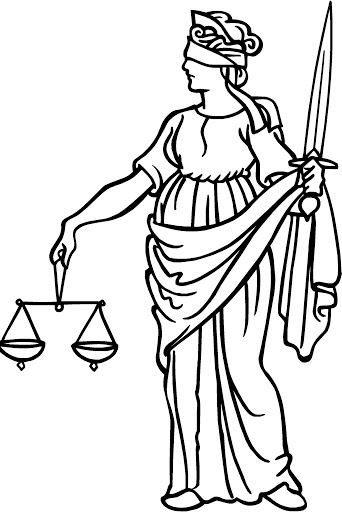
Another view is that it deepens understanding (depth-based approach). This is difficult to believe as many of the original texts in jurisprudence are complex ramblings. Even the abridged versions are like thousand-page long. But it is feasible. The first step is to read the text for mental warm-up. The second step is to re-read it for mental engagement. The third step is to step back from the text and see what the writer is getting at and if it is agreeable or feasible in the realities of the world you live in. The end product of this consistent effort would be better understanding. Take this crude example. It is one thing to say that trans-sexuality should be criminalized because it is disgusting. It is quite another that it should be criminalized because it has detrimental effects on family structures. The former is a mere opinion and jurisprudence does not teach opinions. And the latter is an argument and jurisprudence definitely sharpens argumentation. Therefore, to draw an argument, one might say a family is a unit of security for spouses and children. But when a spouse decides to be a trans-sexual in a marriage with children, such a person deprives his spouse and children from feeling safe. The spouse is unsafe because she has to put up with the new identity and orient her emotional desires accordingly. And if she did not, she is left with painful choices: either to end the relationship or face escapism from her partner in which case the burden of running the family is left to the left-behind spouse alone. The children are unsafe because they may be minors, unable to appreciate the new choice. As a result, they may feel distant from their transsexual parent. In this way, through jurisprudence, one learns the art of argumentation.
Despite its worthy profits, it has regrettably been noted that people think of it as theoretical discipline. Part of the blame is on the authors who have projected it as a package of theories and remaining damage is done by the mind-set to lean it overnight. To avoid continuation of this growing ham, it is suggested that a questions-based approach to the subject is taken. This would mean taking it as a package of questions, answers to which are cascaded into theories. This will make debates of natural law, legal positivism, marxism, feminism, liberalism, utilitarianism and authoritarianism a set of questions with varied answers. These may be plausible or implausible to the modern reader but they are all worth studying for appreciation of human involvement in progression.
On this account, natural law theory — shorthand for overlapping thesis — becomes a response to set of questions taken up St. Thomas Aquinas, John Finnis and Lon Fuller. It becomes a search for the nature of morality, truisms of human nature, attributes of unjust law and citizens’ allegiance to such law. Legal positivism of Thomas Hobbes and John Austin —shorthand for separation thesis — becomes quest for the basis of governance and framing of duty-based governance. Marxism of Karl Marx and Fredreich Engels becomes study of human societies and how they could be improved. Feminism of Mary Wollstonecraft and Catherine Mackinnon becomes a project of making law objective. Liberalism of John Stuart Mill becomes asking when government could regulate freedoms. This way of going about jurisprudence will rekindle interest in its study and make people see its hidden benefits.
The author teaches jurisprudence and legal theory at Pakistan College of law, Lahore. She can be contacted at: mawraraja@protonmail.com