Jahangir's World Times First Comprehensive Magazine for students/teachers of competitive exams and general readers as well.
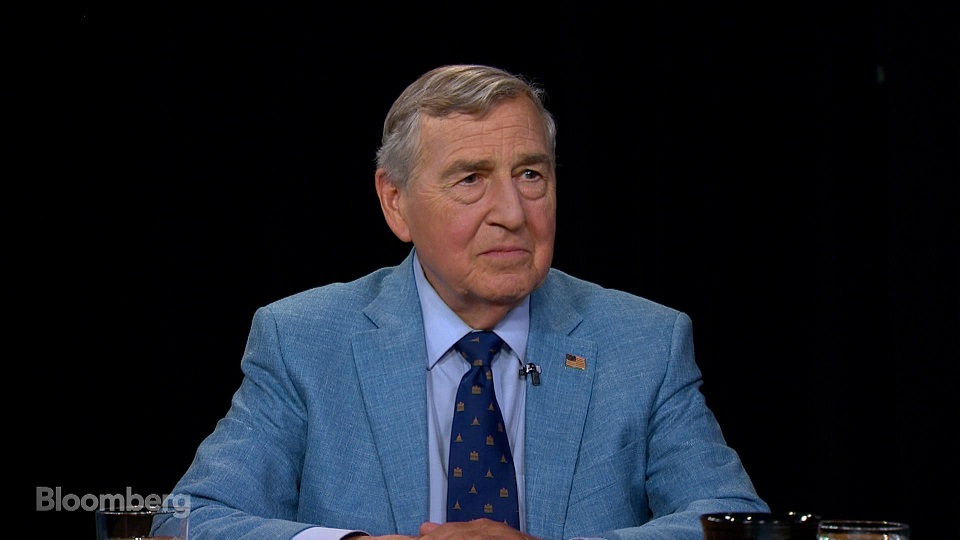
Prof.Graham Allison
“While the US and China cannot escape the deeply-rooted structural realities, they could find a way to manage that rivalry without war.”
Prof. Graham Allison is the Douglas Dillon Professor of Government at Harvard University where he has taught for five decades. Allison is a leading analyst of national security with special interests in nuclear weapons, Russia, China, and decision-making. Prof. Allison, world’s leading international relations expert and Founding Dean of Harvard University’s John F. Kennedy School of Government, has a notable portfolio of students, including the Prime Minister of Singapore, Lee Hsien Loong, and former Secretary-General of the United Nations, Ban Ki-moon. In addition to being an educator, Allison served in the US Department of Defense from the 1960s to the 1990s, and was an advisor to the US presidential candidate, Joe Biden, when he was the Vice President.
As Assistant Secretary of Defense under President Clinton and Special Advisor to the Secretary of Defense under President Reagan, he has been a member of the Secretary of Defense’s Advisory Board for every Secretary from Weinberger to Mattis. He has the sole distinction of having twice been awarded the Distinguished Public Service Medal, first by Secretary Cap Weinberger and second by Secretary Bill Perry. He has served on the Advisory Boards of the Secretary of State, Secretary of Defense, and the Director of the CIA.
Since the outbreak of the coronavirus pandemic, China and the United States have been engaged in a wide spectrum of competition that has enhanced their rivalry. We have seen debates and arguments about China’s one-party system versus the US democratic system, the China-US blame game, and the ideology-centred media war. And, this is exactly what Graham Allison, renowned international relations expert, had predicted in his 2017 book “Destined for War: Can America and China Escape Thucydides’s Trap?” In this monumental work, Prof. Allison, citing the famous Thucydides’s Trap—a notion, propounded by Thucydides, which asserts that a rising power will almost always come to blows with an established one—predicted that a war between China and the US is inevitable. Allison had led a study at the Harvard Belfer Centre for Science and International Affairs into conflicts between reigning and rising powers over the past 500 years. In 12 of 16 cases, the result was war. “When the parties avoided war, it required huge, painful adjustments in attitudes and actions on the part not just of the challenger but also the challenged,” he opines. Following are some excerpts from Prof. Allison’s different interviews in which he has talked about a looming US-China war.
Question: Has the black swan of the coronavirus brought China-US competition to its highest level? How will the pandemic reshape their bilateral relations?
Answer: We have to recognize that this coronavirus threat is layered on top of deep, inescapable structural realities. China is a meteoric rising power that really is threatening to displace the US from positions we have come to believe that are our natural positions at the top of every pecking order. In short, this is a classic Thucydidean rivalry—with all that implies (including the genuine risk of a catastrophic war neither nation wants).
To complicate the picture further, each country’s successes and failures in its own “war” against this enemy will inescapably become a significant feature in this rivalry. If China succeeds in not just flattening but bending the curve of new infections toward zero—as they seem to have done—while the US flounders, no amount of rhetoric will be able to disguise this bottom line. The consequences for the overall competition, for judgments about the relative merits of democracy versus autocracy, and for America’s standing in the world will be profound.
Question: You have said the US and China have to be ruthless rivals and intense partners, at the same time, to defeat the virus. What does that require both countries to do?
Answer: As best as I can understand, the current coronavirus is really an existential threat that neither the US nor China can successfully defeat on its own. Even if one of them drives new infections within its borders to zero, I find it almost impossible to imagine that the other can hermetically seal its borders. So, if this is genuinely an existential crisis for each, and if neither can defeat it without the cooperation of the other, then if two nations are rational, their only viable option is to find ways to organize the necessary cooperation. My book suggests a number of specific areas where working together in the medical and scientific arena can reduce the time it takes to develop vaccine, better diagnostics and better therapeutics.
Question: Some US politicians sharply blamed China for the current virus crisis in the US, while rational scholarly voices in the US called for China-US cooperation in order to succeed in the war. How does this division hinder China-US cooperation?
Answer: Despite China’s utmost efforts, it’s undeniable that there were many problems in Wuhan’s early handling of the outbreak and to its credit, China has learned a great lesson from this. But the effort by many in Washington to make this the primary storyline is escapist—an attempt to duck responsibilities for their own failures. The blame game both have been playing is a childish distraction—and let’s hope that after the conversation between President Donald Trump and President Xi Jinping, both sides will now move on.
At this point, the evidence from all sources suggests that China’s efforts have been remarkably successful. Today, financial markets are betting that China has essentially succeeded in the first phase in this long war. If after its sharp decline in the first quarter, it now returns to robust economic growth, on the one hand, and the US teeters on the brink between an extended recession and a genuine depression, on the other, the gap between the GDP of the US and that of China will widen (by PPP, China’s economy is larger). If a Party-led authoritarian government demonstrates competence in ensuring its citizens’ most basic human right—the right to life—while a democratic, decentralized government flounders, complaints about the measures China has used to do so will sound to many like sour grapes.
Question: So far, we see the absence of the US leadership—a role the world’s sole superpower is supposed to play. Some scholars even believe this may declare the death of American competence. What is your take?
Answer: The urgent challenge America faces in attempting to defeat coronavirus is not China. It is our own failures to mobilize a response proportionate to the threat. After countries like Singapore and South Korea began implementing emergency measures, the US government remained in denial for weeks. In a world where South Korea began testing 10,000 citizens a day within weeks of patient zero—and can now test 20,000 a day—who is still floundering with one excuse after another? Nonetheless, if experts are right about the likelihood of second and third waves of this pandemic, this “war against coronavirus” will continue for some time to come. Democracies are historically slow to awake to challenges, and slow to respond. But once their mind is focused, watch out. I agree with the world’s most successful investor, Warren Buffet, who always reminds investors that no one ever made money in the long run by selling America short.
Question: How will this global pandemic affect the views you expressed in your book “Destined for War?
Answer: My purpose in writing the book was to not only alert us to the risk but also to motivate wise leaders in both nations to stretch beyond history as usual. While the US and China cannot escape the deeply-rooted structural realities that will make them intense rivals, like four of the other 16 cases of Thucydidean rivalry in the past 500 years, they could find a way to manage that rivalry without war.
Incredible as it seems, and as insane as it would be if it happened, the possibility of an actual shooting war between the US and China is much greater than most people appreciate. In a context of Thucydidean rivalry, miscalculations could escalate all too easily to a catastrophe. But to be clear, I do not think war is inevitable.
My principal agenda for the past three years since I sent my book to the publisher has been to find a way to “escape Thucydides’s Trap.” Given the consequences of a war between the US and China, which could escalate to full-scale nuclear war that would largely destroy both societies, each must be supremely motivated to prevent this from happening. The question is whether adults in both governments can find a way to peacefully coexist.
To stretch for a silver lining in the current coronavirus crisis, if the US and China can internalize the strategic insight that external threats each face and cannot defeat by itself command a degree of partnership, could this become a “learning moment” about how they can manage the intense rivalry that will be the defining feature of their relationship for as far as any eye can see? In the distant past, I was proud to serve in the Reagan administration. I have memories of the process that led this fierce anti-Communist to a startling realization. As he put that insight in his oft-stated bumper sticker: “A nuclear war cannot be won and must, therefore, never be fought.” Perhaps an analogous specter today could motivate statesmen to tale a page from Chinese wisdom and create a 21st-century model of what the Song Dynasty (960-1279) did with the Liao (916-1125) in the Chanyuan Treaty of 1005 that created a “rivalry partnership.”