Foreign Writers

Dark Geopolitics of the Middle East

Dark Geopolitics of the Middle East

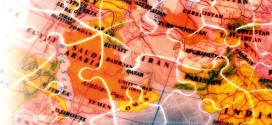
A third wave of geopolitics has been making its way into the Middle East’s political geography since the end of the Cold War. The first wave began with the collapse of the Ottoman Empire after World War I. The second wave followed World War II, when the European colonial order crumbled. The third wave will reach its apex with the …

Read More »

A European Role in Palestine?

A European Role in Palestine

Saving Gaza From Israeli Terrorism The international community’s attention in the Middle East nowadays is inevitably focused on the Islamic State’s military advances in Syria and Iraq, the failed states of Yemen and Libya, the activities of extremists everywhere, and the continuing efforts to implement submitted a deal to contain Iran’s nuclear ambitions. Meanwhile, the oldest dispute in the region …

Read More »

When Multilateralism Met Realism — and Tried to Make an Iran Deal

When Multilateralism Met Realism

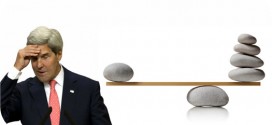
President Barack Obama’s Aug 6 speech on Iran, notable for its “my way or war” polemics, signals a hardening of the debate over the Iran nuclear agreement, known as the Joint Comprehensive Plan of Action, or JCPOA, just as Congress begins reviewing the deal. This political calcification reflects various factors, from presidential election polling to tensions between the Obama administration …

Read More »

The Meltdown of the Global Order

The Meltdown of the Global Order

How climate change is transforming the ground rules of power politics Just over a century ago, a British geographer Halford Mackinder laid out the fundamental tenets of a new discipline that came to be known as “geopolitics.” Simply put, he said, international relations boiled down to the intersection of unchanging physical geography with the vagaries of human politics. Only one …

Read More »

Identifying and Preventing Future Threats to International Security

The last decade has clearly demonstrated that the nature of threats to international security has changed significantly. Structural challenges, such as terrorism, cyber-attacks and nuclear proliferation, have created an entirely new security environment. National states’ monopoly on using force is eroding, state boundaries have lost much of their relevance and private actors have increasingly become powerful in international security. The …

Read More »

Between Asia and the Middle East

How Pakistan Maintained a Delicate Balance Pakistan lies at the crossroads of what many people traditionally consider the “Middle East” and “Asia.” Not only is it an important country in the international sphere, but so are all four of its neighbours: Iran, Afghanistan, China, and India. Pakistan’s coastline along the Arabian Sea also brings it into close contact with the …

Read More »

No More Silence on Child Abuse

How come it took nine years for the truth about the horrifying pursuit of a paedophile gang in a village in Kasur to emerge? Some two dozen members of the gang would force-manage a child abuse scene, film it, take it to the victim’s family and get paid handsomely by blackmailing them. During these years, the gang, reportedly, victimized some …

Read More »

Rethinking the War on ‘IS’

Rethinking The War On Islamic State

As much of the Middle East sinks deeper into division between competing political camps, the terror outfit, Daesh, continues its unhindered march toward a twisted version of a Muslim caliphate. Thousands have lost their lives, some in the most torturous ways. Violence meted out by IS or Daesh is hardly an anomaly, considering that the group was spawned in a …

Read More »

A New Balance of Power in the Middle East

A New Balance of Power in the Middle East

On July 14, a historic nuclear agreement between Iran and P5+1 (China, France, Russia, the United Kingdom, and the United States; plus Germany) was reached in Vienna, Austria. This deal has raised many questions as to what will be its implications for Obama’s regional strategy, Iran’s own foreign policy orientation, the response from regional partners, the global non-proliferation regime, and …

Read More »