Jahangir's World Times First Comprehensive Magazine for students/teachers of competitive exams and general readers as well.
OIC and Two Big Challenges
Mehboob Hussain Babar
Since its inception, the Organization of Islamic Cooperation (OIC) has many challenges to deal with, but Palestine and Kashmir remain the most dominant issues on its agenda. However, it is also true that it has been unable to pressure the world into solving these issues.
Indian-Occupied Kashmir
Kashmir issue dates back to the unjustified division of the Indian Subcontinent, carried out by the Radcliffe Boundary Commission that unfairly gave the Muslim-majority region of Gurdaspur to India, thereby giving it a land route to enter Kashmir. This was like sowing the seeds of discord between the two newly-emerged states. Both Pakistan and India have fought three wars—and a mini war, according to some experts—over Kashmir. Now, especially after India’s forced annexation of the occupied valley through revocation of articles 370 and 35A of the Indian Constitution on August 05 last year, it has become a nuclear flashpoint. All the successive Pakistani governments have strongly advocated for the resolution of Kashmir issue according to the UN resolutions. In fact, several rounds of bilateral discussions took place between India and Pakistan in 1964, 1972 and 1999 to settle the Kashmir dispute but all efforts proved futile as India always used such talks to hoodwink the world that it is engaged with Pakistan to resolve this bilateral issue—which it actually is not .
Organization of Islamic Cooperation (OIC) is the only representative of the Muslim world, grouping 57 states from four continents—nearly one-fourth of the total membership of the United Nations. Pakistan, a country of around 210 million people, has a vital role to play in the world affairs, specifically those of the Muslim world owing to the status conferred on it by its strategic and geographic location. For the last many decades, Muslim Ummah and Islam remained under stress from many sides. The twentieth century saw the aggression against Muslims, and their collective slaughter in wars and conflicts, prompted by an insatiable hunger of the world powers to occupy resources of the Muslim world and subjugate it.
Pakistan’s Efforts
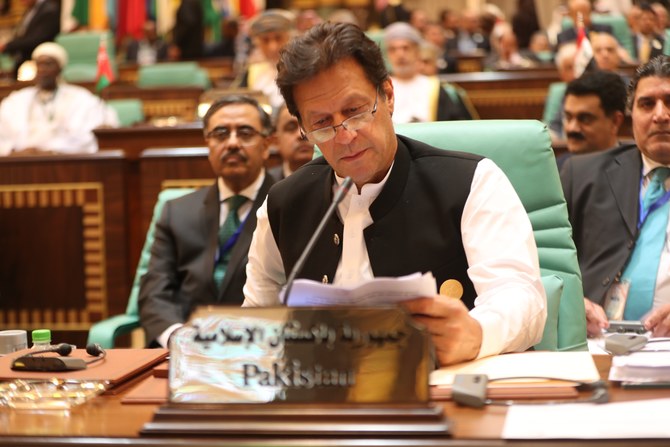
Pakistan has persistently highlighted the Kashmir issue on all available international forums like the United Nations and the OIC, and urged the world community to help settle this issue. It is due to Pakistan’s efforts that Kashmir has always been high on OIC agenda and been a part and parcel of OIC’s all resolutions and conferences. It was the result of sustained efforts of Pakistan that the ‘Contact Group on Jammu & Kashmir’ was formed in 1994 with an aim to coordinate policy of the OIC on Jammu and Kashmir dispute. Islamic leaders unanimously “condemned flagrant violations of human rights in Kashmir and called on member states to take all necessary measures to convince India to put an immediate end to these violations” in a resolution passed during the 9th Islamic Summit held in Doha, Qatar, in 2000. The resolution also called for “the people of Kashmir to exercise their inalienable right to self-determination”. While addressing all the states of OIC in Makkah summit 2019, Prime Minister of Pakistan, Imran Khan, said: “The people of Kashmir must also have their right to self-determination; us as a body must stand against the oppression happening with the Muslim world.” The OIC General Secretariat also urged for an immediate resumption of dialogue process between Pakistan and India “which is a prerequisite for development, peace and stability in South Asia”. On Pakistan’s request, the OIC called an emergency meeting of its Contact Group on Jammu and Kashmir on 6th of August 2019. The OIC expressed “deep concern” over the recent developments in the Indian-Occupied Kashmir, mainly the revocation of the special status of the Occupied valley. The Contact Group reaffirmed that Jammu and Kashmir is an internationally-recognized dispute, pending on the agenda of the United Nations Security Council. The Contact Group also stressed upon India again to allow access to the OIC Independent Permanent Human Rights Commission (IPHRC) and other international rights bodies on the Indian-Occupied Jammu and Kashmir in order to independently verify the gross and blatant human rights violations. According to various human rights organizations, thousands of people have been killed in the ongoing conflict in the Kashmir valley since 1947.
Challenge of Palestine
Due to the importance of its natural resources and geopolitical significance, the history of Middle East region remained turbulent in the past and still, in the 21st century, it has many key issues. The Israeli-Palestinian conflict is one of the world’s longest-running conflicts over a territory. It is a 100-year-old issue between two self-determination movements—the Jewish Zionist and the Palestinian nationalist. After the breakup of Ottoman Empire in the World War I, British took control of the area. Tensions between Israel and Palestine broke out when Britain asked to establish a “national home” for the Jewish people in Palestine under the Balfour Declaration. In 1947, the UN passed a resolution for Palestine to be split into two separate Jewish and Arab states, with Jerusalem becoming an international city. This plan was accepted by the Jewish leaders but rejected by the Arab community and situation turned from bad to worse paving the way for the first Arab-Israel war in 1948. After the 1948 Arab-Israel war, the Holy Land was divided into three parts: the State of Israel, the West Bank and the Gaza Strip. So, for now, two more wars—of 1967 and 1973—have been fought between the Arab states and Israel over Palestine. The Palestinian-Israeli conflict is still a problem and is awaiting solution. Several peace agreements have been failed since then, including the Camp David Accord, Madrid Accord and Oslo Peace Agreements, while the number of Jewish settlements in the West Bank has been multiplied, more and more Palestinian lands have been taken over, and tension has increased in the occupied territories.
Role of OIC for the Palestine
OIC played a very crucial role in the issue of Palestine and proved a source of unity of the Ummah where they can take steps for their betterment. All the OIC summits and conferences of foreign ministers discussed the issue of Palestine and showed their determination to stand with the people of Palestine until they get their independence and due right of territory. At the time of 10th and 11th Islamic summits of the OIC, the need was reaffirmed “to establish an independent Palestinian State” and seek solution of the Palestine problem according to the will of the people of Palestine. After the escalation in violence by Israel in the occupied territories and imposition of restrictions on access to the Al-Aqsa mosque in Jerusalem, an extraordinary summit was held in Jakarta in 2016 upon the request of Palestinian President Mehmoud Abbas. In this summit, OIC “reaffirmed the resolutions adopted by ordinary and extraordinary sessions of the Islamic Summit and by Organization of Islamic Cooperation Council of Foreign Ministers; reaffirmed the right of the Palestinian people to self-determination, including the right to their independent state of Palestine, with Al-Quds Al-Sharif as its capital on the cause of Palestine, including the cause of the city of Al-Quds Al-Sharif, and the Arab-Israeli conflict and reaffirmed full support for the ‘National Unity Government’ under the leadership of the Palestinian President, which comes as a culmination of the implementation of the Cairo and Makkah agreements and the Doha Declaration.” Moreover, OIC “vociferously rejected and condemned” the Trump’s “deplorable action” to move the US embassy in Israel from Tel Aviv to Jerusalem in 2017. Furthermore, in its final communiqué, OIC summit, held in Makkah in May 2019, condemned “any illegal and irresponsible decision that recognizes Jerusalem as the capital of Israel.” The OIC summit reiterated “rejection of any proposal for peace settlement that does not accord or conform to the legitimate, inalienable rights of the Palestinian people.” In Makkah summit, OIC also refused to accept any decision to change legal and demographic status of Golan Heights, especially the US decision to recognize Israeli sovereignty over the territory as Trump administration recognized Israel’s sovereignty over Syria’s Golan Heights in March 2019. Prime Minister Imran Khan during his keynote speech at 14th OIC Summit in Makkah said: “Pakistan supports the two-state solution recognizing East Jerusalem as the capital of Palestine.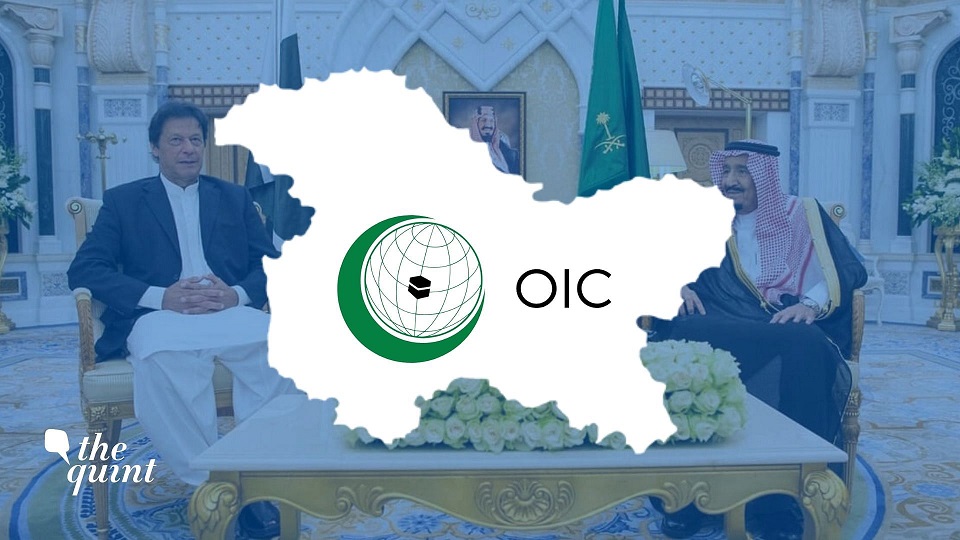 ” He echoed Pakistan’s strong stance to resolve Kashmir and Palestine disputes, adding that peaceful struggle of the people of Kashmir and Palestine must not be labelled as terrorism. The Pakistani passport is the only one in the world which says that its holder can travel anywhere on it, except Israel. During an event at the Asian Society in New York City, held in September 2019, PM Imran Khan said that Pakistan will not recognise Israel until there is a homeland for the Palestinian.
Conclusion
The Organization of Islamic Cooperation has so far miserably failed to liberate the long-persecuted Kashmiris and Palestinians from the yoke of imperial India and Israel. The organisation of the divided Muslim countries, without any practical action, has only issued rhetorical statements in favour of Kashmir and Palestine. A number of summits and conferences have been held for the Kashmir and Palestine but no fruitful result has ever been produced.  Now, it seems that the Kashmiris and Palestinians will face more persecution because the Middle East is gripped in political turmoil, rampaging militants and an ongoing Shia-Sunni schism which make the OIC more impotent and divided. The organisation should be made more powerful and effectual in all spheres of international affairs. Above all, all Muslim states should shun acrimony amongst themselves and gather the courage to work together to sort out the issues.
The writer is a member of staff.