
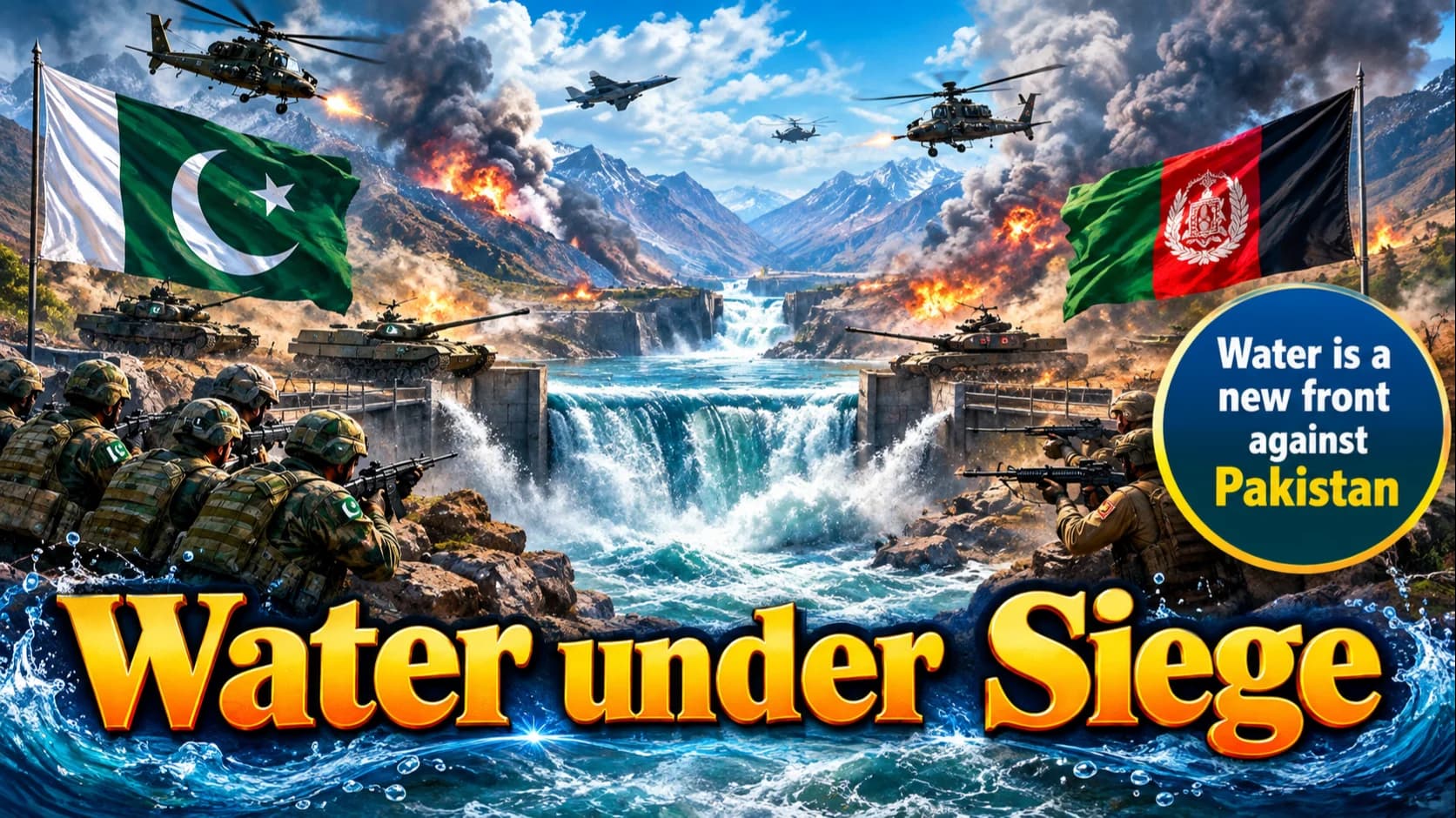



Freshwater resources remain a globally threatened renewable resource despite being fundamental to an extensive range of essential ecological and societal activities – from agriculture to hydropower generation, industrial expansion and waste disposal. Freshwater resources are bounded within river basins which are often distributed across political, ethnic and cultural borders, which can give rise to intense hydro-political disputes. One such case is that of Afghanistan and Pakistan, as the two countries share nine river basins within the broader Indus River system. However, drawing inspiration from India's incorporation of a climate and water dimension into its conflict with Pakistan, the Afghan Taliban leadership announced plans to construct dams on the Kunar and Kabul rivers.
As Afghanistan announced its dam construction plans, concerns in Pakistan are resurfacing over the absence of a formal water-sharing framework between the two neighbours. As climate change intensifies glacier melting and makes rainfalls increasingly unpredictable, such controversial steps will further intensify tensions between them.
From Kabul's perspective, these projects are acts of sovereignty — an attempt to secure energy, food and water for a population still recovering from decades of war. Current Afghan water usage from shared rivers stands at only 1.8 MAF, projected to double to 3.6 MAF by 2030. As a landlocked and mainly agrarian country, it is not only inevitable but necessary to tap into its natural resources. Yet from a downstream lens, unilateral action in the absence of coordination risks destabilizing an already delicate ecological as well as political balance.
The Kabul River
The Kabul River is a transboundary watercourse that flows in Pakistan and Afghanistan.
It originates in Afghanistan's Hindu Kush mountain range and flows eastward into Pakistan, eventually joining the Indus River near the city of Attock.
The Kabul River provides over 20 bcm of water each year and supports a population of some 34 million people in an area of approximately 92,000 sq km.
It irrigates some 506,000 ha on both sides of the border.
In the context of the Kabul River, Afghanistan is the upper riparian country, while Pakistan is the lower riparian country.
Recent hydrological estimates indicate that Pakistan currently receives around 17 million acre-feet (MAF) annually from the Kabul River system, contributing nearly 20 per cent of total Indus inflows during the early Kharif season.
Note: During the winter months, when Indus River levels decline, the Chitral–Kunar–Kabul network becomes crucial for Pakistan's irrigation, hydropower generation, and drinking water across Khyber Pakhtunkhwa and Punjab.
The Kunar River
The Chitral River originates in Pakistan and flows into Afghanistan as the Kunar River.
It flows for around 482 kilometres through Afghanistan's Kunar province, and then joins the Kabul River before returning to Pakistan.
o According to data from the International Centre for Integrated Mountain Development (ICIMOD) and the United States Geological Survey (USGS), roughly 75 to 80 percent of the river's water originates in Pakistan's Chitral region-from the Tirich Mir glacier (elev. 7,708 meters) and the valleys of Yarkhun, Laspur and Torkhow, while only 20 to 25 percent is supplied by rainfall and local glaciers within Afghanistan, such as those in Narang, Brom, and Gambir.
This geographic configuration gives Pakistan upstream leverage, yet its downstream dependence makes it vulnerable to flow reductions.
Pakistan depends on around 17 MAF of water from the Kunar annually.
The Conflict
On average, about 23 MAF of water flows from Afghanistan into Pakistan each year, with roughly 17.5 MAF coming from the Kabul River alone. Interestingly, 6 MAF originates from the Kunar River.
Nearly 80 percent of KP’s agriculture depends on this system, which shows how intertwined the two hydrological destinies are.
Afghanistan aims to build 12 new dams alongside big hydropower projects, backed by foreign aid and Indian technical assistance.
If these constructions materialize, Pakistan's inflows could drop by about 3 MAF, reducing total availability to 14 MAF per annum, which is a shortfall of nearly 16 percent.
Pakistan's Water Profile
From being a water-abundant state in 1951, Pakistan has become water-scarce and is now heading towards conditions of absolute scarcity; annual water availability has fallen below 1,000 cubic metres per person—and may already be well past this threshold—with serious implications for food production. The population is growing at roughly 2.5–2.6 percent annually, even as water storage capacity and governance reforms have lagged behind.
Climate change compounds this risk. Glacial melt in the western Himalayas and Hindu Kush has become less predictable; snowmelt patterns are shifting; extreme events are more frequent. Together, these trends create rising potential for hydropolitical tension and environmental insecurity in a basin that still lacks any formal water-sharing framework between Kabul and Islamabad.
Indian Involvement
India's involvement in Afghanistan's water infrastructure projects, though within Kabul's sovereign right to seek partnerships, is viewed by Islamabad as an extension of hydro-strategy, a means for exerting indirect pressure downstream. The Indus Waters Treaty has survived wars and politics, yet its stability relies on the respect for mutual dependence. The absence of a similar framework between Pakistan and Afghanistan leaves both nations exposed to misperception and reactive policymaking.
India's engagement in Afghanistan's water sector has been neither altruistic nor apolitical. Through a combination of financial assistance, engineering expertise and covert technical support, New Delhi has steadily expanded its footprint across key Afghan river systems. Projects such as the Naghlu, Darunta and Shah wa Arus dams – originally framed as development initiatives – have transformed into geopolitical levers capable of regulating water flows into Pakistan. The $250 million Shahtoot Dam project near Char Asiab, for instance, will store 250 million cubic meters of water under the pretext of serving Kabul's needs, but in effect, it will substantially reduce downstream availability to Pakistan. India's actions mirror its pattern of unilateralism under the Indus Waters Treaty, where it continues to construct projects on western rivers allocated to Pakistan, tightening hydrological control from both the eastern and western flanks.
This twin-front water strategy marks a profound shift from hydro-diplomacy to hydro-politics, converting shared waters into instruments of coercion.
Implications
The implications for Pakistan, particularly for KP, are severe and immediate.
a. Kabul River
The Kabul River is the province's lifeline, sustaining agriculture, powering hydropower plants and meeting urban water needs. Any upstream diversion or dam construction directly threatens this delicate balance. Reduced inflows will devastate irrigation networks across fertile districts such as Peshawar, Nowshera and Charsadda, undermining food production of vital crops like wheat and maize. Energy generation at installations such as Warsak Dam will decline, intensifying power shortages across KP. Urban centres already grappling with inadequate water supply will face deeper crises of scarcity and sanitation.
Beyond the economic fallout, the ecological repercussions could be irreversible: wetlands drying up, groundwater depletion accelerating, and biodiversity declining. Afghanistan's upstream actions, guided by Indian expertise and funding, thus strike at the heart of Pakistan's economic resilience and human security.
This is not an isolated experiment. The Salma Dam precedent offers a cautionary lesson. Officially inaugurated as the Afghanistan-India Friendship Dam in 2016, it curtailed flows into Iran's Khorasan region, sparking diplomatic outrage. The project revealed India's willingness to use water as a geopolitical weapon and Afghanistan's readiness to act unilaterally without consulting its neighbors. The Kabul River situation reflects an amplified version of this pattern. The Afghan Taliban's approach seems less about national hydrological management and more about tactical bargaining: using water as leverage to pressure Islamabad on border management and counterterrorism issues.
b. Kunar River
Estimates suggest that the construction of dams on the Kunar could reduce these flows by roughly 16 percent, directly affecting early cropping, water storage and energy generation in KP and downstream Punjab. This is a significant figure for a country whose agriculture is highly water-intensive.
The Way Forward
The Taliban leadership must realize that stability does not come from concrete and cement, but from cooperation and compassion. Water can be a weapon or a bridge, the choice is theirs.
As a lower riparian, Pakistan has legal rights to equitable water use, protection from upstream harm and needs prior consultation on Afghan projects and transparent data – sharing for cooperative management. In fact, shared river basins can become platforms for cooperation if managed wisely. Countries across the world – from the Nile Basin to the Mekong River – have created joint commissions to share data, regulate usage, and resolve disputes. Pakistan and Afghanistan can follow similar models. There are certain steps that both countries need to take to avoid any conflict on water sharing.
First, both sides must initiate preventive water diplomacy. Establishing a joint water commission with hydrologists, environmental experts and policymakers could help monitor river flows, assess climate impacts and plan infrastructure responsibly. Transparency over dam projects and water usage would reduce fears of sudden shortages, hence reducing chances of conflict.
Second, there is a need for a broader regional approach to address this issue, as regional actors can play a constructive role.
o China, which is a friend of Pakistan and has pragmatic engagement with Afghanistan, could support technical cooperation. International organizations such as the World Bank or UN agencies could provide funding and expertise for sustainable water management.
Third, Afghan Taliban leadership needs to understand that water is a shared lifeline, not a weapon.
o Treating water as a tool of pressure and neglecting its natural humanitarian importance risks deepening Afghanistan's existing humanitarian crisis and generating spillover effects for neighbouring states, particularly Pakistan.
Lastly, both countries must invest in water efficiency at home.
o Pakistan wastes enormous amounts of water through outdated irrigation systems and leakage, while Afghanistan lacks modern storage and conservation technologies. Improving domestic water governance would reduce pressure on shared rivers.
Conclusion
Both Pakistan and Afghanistan are bound by geography, faith and fate. Rivers do not recognize borders; they rather recognize only gravity. Their flows teach a profound lesson: when one side blocks the current, both banks suffer. So, it is time for wisdom to prevail over resentment, and for diplomacy to replace hostility.
The writer is a student of Environmental Science.