
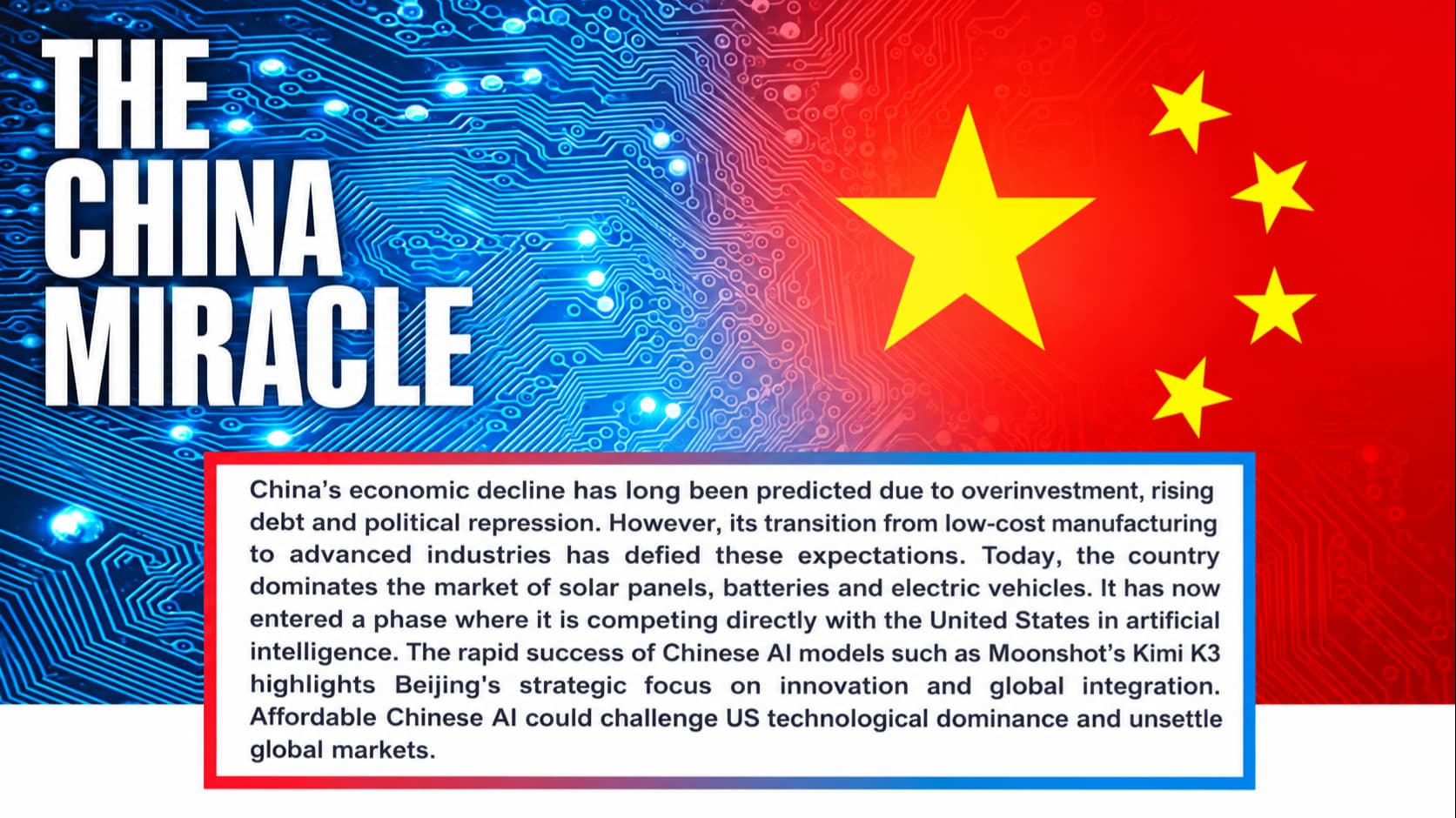
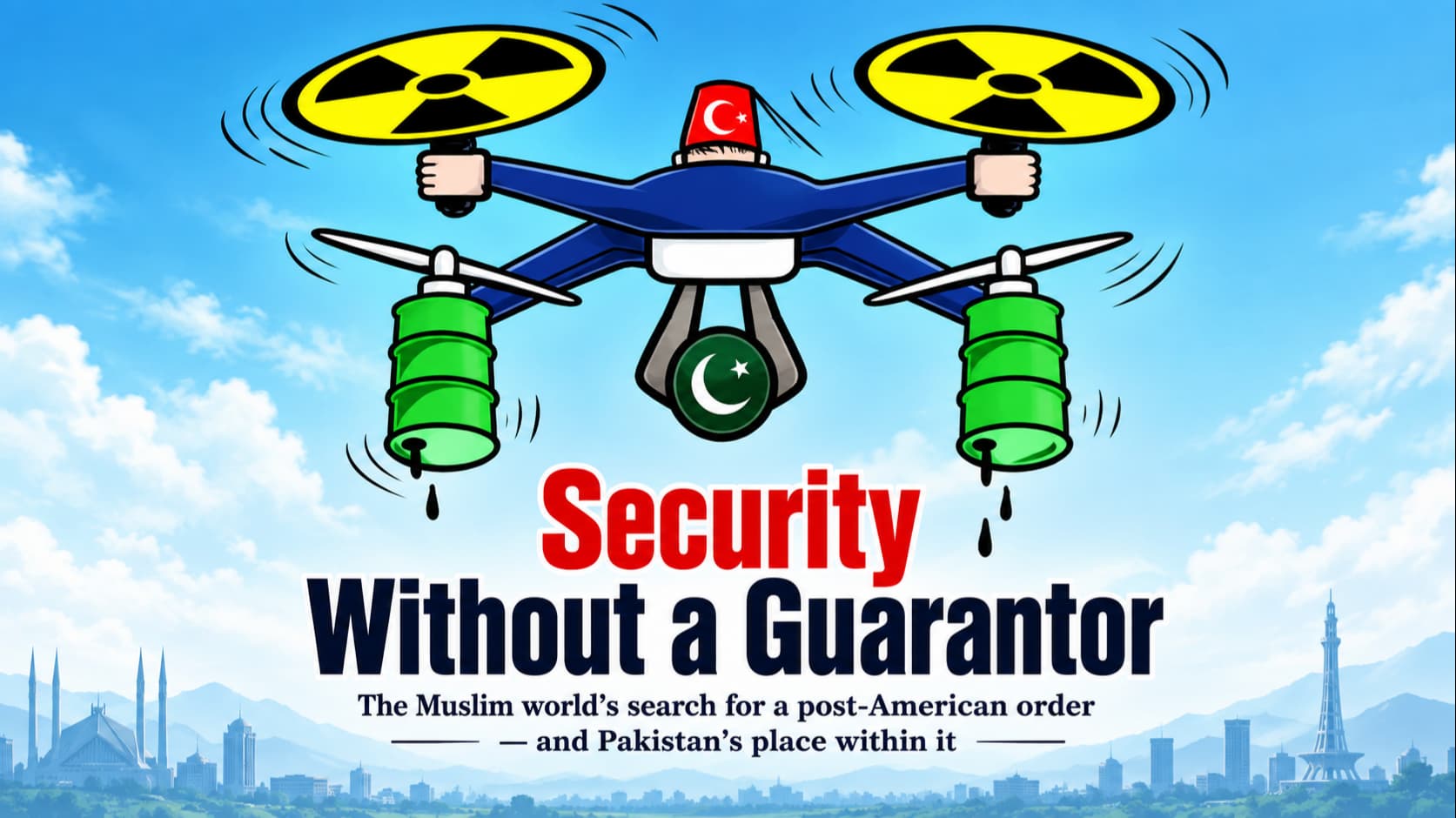
The rules-based international order is no longer merely weakening; it has effectively collapsed. In its place, a power-based system has already emerged. At the recent World Economic Forum (WEF) summit in Davos, much discussion revolved around the apparent death of this order, an arrangement that many now concede had been on life support for years. While several leaders expressed nostalgia for the old system, few were willing to acknowledge openly what has replaced it.
One of the most candid interventions came from Canadian Prime Minister Mark Carney, a figure long associated with liberal globalization. In a striking departure from conventional diplomatic language, Carney acknowledged that the rules-based order had always been selectively applied. Powerful states, he admitted, exempted themselves when convenient; trade rules were enforced asymmetrically; and international law was applied with varying rigor depending on who stood accused and who stood victim. Rather than continuing the fiction, Carney urged policymakers to name reality as it is: an era of intensifying great-power rivalry where economic integration itself is increasingly used as a coercive tool.
This admission crystallized a long-suspected truth. The rules-based order was never as neutral, universal or binding as it was claimed to be. What has changed is not its moral character, but the inability of its custodians to maintain the façade.
Introduction
For decades after World War II, global governance rested on a simple but powerful bargain. States accepted US primacy not merely because Washington possessed unmatched power, but because it embedded that power within institutions. Security guarantees, open markets and multilateral norms transformed asymmetry into legitimacy. Consent — expressed through alliances, institutions and coalitions — was the foundation of American leadership. That foundation is now cracking. What is emerging in its place is not multipolar stability, but a more volatile system defined by coercive leverage, transactional diplomacy and selective adherence to rules.
Hence, today, amid the familiar language of growth, innovation and resilience, the rules-based international system is breaking down, economic interdependence is being weaponized and power is once again being exercised with fewer constraints and less consent. This rupture is no longer abstract. It is visible in practice. The recent US operation in Venezuela — marked by direct intervention and the detention of the country's sitting president — signalled a departure from established norms of state conduct. Regardless of how one assesses Venezuela's internal politics, the method mattered. The action bypassed multilateral channels, ignored United Nations procedures, and unfolded without broad allied endorsement.
Power as the Historical Constant
For most of recorded history, international order has been shaped by power rather than principle. From the Roman Empire to the age of colonialism, global hierarchies were enforced by military dominance and economic extraction. While the names and ideologies of dominant powers changed, the underlying logic remained constant: might determined right.
The aftermath of the Second World War appeared to mark a rupture with this pattern. In response to the devastation of global conflict, the United States spearheaded the creation of what was initially termed the “liberal international order.” Its stated ambition was transformative: to replace great-power rivalry with a system governed by shared rules, multilateral institutions and cooperative norms. Liberal democracy, market capitalism and collective security formed its ideological core.
Institutions such as the United Nations, the International Monetary Fund (IMF) and the World Bank were designed to anchor this new order. They promised predictability, peaceful dispute resolution and economic recovery. Yet beneath this architecture lay an unmistakable reality: the order was US-led, US-designed and US-enforced.
The Cold War and the Limits of Universality
The promise of a universal liberal order quickly encountered structural limits. The onset of the Cold War divided the world into two rival blocs. While the Western bloc adhered to liberal institutions, the Soviet-led communist bloc constructed its own parallel system, complete with military alliances and economic coordination mechanisms.
This division exposed the order's conditional universality. It was never truly global but bloc-specific, sustained by ideological alignment and strategic necessity rather than neutral principles. Even so, the liberal order claimed moral superiority, positioning itself as the inevitable endpoint of political evolution.
When the Soviet Union collapsed in the early 1990s, this claim appeared vindicated. The United States emerged as the sole superpower, and many former communist states integrated into Western institutions. Yet rather than eliminating power politics, the post–Cold War order merely obscured them. Power was embedded in legal language, institutional legitimacy and moral rhetoric. The system functioned not because it was fair, but because Western dominance remained uncontested and the costs of resistance outweighed the benefits.
The Decisive Blows
The order's demise stems from two primary forces:
1. A Structurally Flawed Foundation: The order was never equitable. Institutions like the IMF and World Bank employ weighted voting that privileges the US and its allies, imposing policies that often served Northern interests at the expense of the Global South. The WTO's negotiations frequently sidelined poorer nations. The system perpetuated hierarchy while maintaining an illusion of fairness.
2. The Demolition of the Façade: The first administration of Donald Trump delivered a decisive, public rupture. It abandoned multilateral trade principles, ignited trade wars and crippled the WTO's dispute system. This unilateralist turn was not reversed by his successor. A subsequent Trump administration has openly rejected international law, exemplified by the 2026 military operation in Venezuela and the abduction of President Nicolás Maduro. This signals a conscious shift towards unconstrained power politics and protectionist hegemony.
A World Defined by Parallel Structures
The erosion of the rules-based order has not produced an institutional vacuum but a fragmented landscape of parallel structures. As multilateral regimes lose credibility, powerful states increasingly bypass them through ad hoc coalitions, bilateral deals and coercive instruments.
This trend is particularly evident in the Middle East. Conflicts there have become more entrenched and less amenable to de-escalation as regional and global powers operate outside established frameworks. Energy corridors, nuclear governance and security arrangements are increasingly managed through informal mechanisms that privilege flexibility over predictability.
These parallel structures do not dismantle existing regimes outright. Instead, they render them functionally obsolete. Institutions persist on paper, but substantive decisions are made elsewhere, often behind closed doors.
Iran and the Politics of Regime Erosion
The US–Iran confrontation illustrates this dynamic vividly. The unilateral US withdrawal from the Joint Comprehensive Plan of Action (JCPOA) in 2018 undermined not only Iran's nuclear commitments but the broader logic of regime-based cooperation. The agreement was embedded in a framework of shared expectations and mutual constraint. Its abandonment signalled that even highly institutionalized arrangements could be reversed unilaterally.
What followed was not a new multilateral framework but a parallel order based on sanctions, bilateral pressure, and strategic ambiguity. Iran's subsequent actions—enhancing nuclear ambiguity, strengthening regional partnerships and leveraging energy assets—reflect adaptation to a system in which predictability has given way to uncertainty.
Strategic Alignment and the Cost to Order
The US–Iran–Israel triangle further exposes the costs of parallel governance. For Israel, Iran represents a structural challenger capable of altering regional power balances. From this perspective, multilateral regimes risk legitimizing Iran as a normalized actor. Pressure-based strategies are therefore preferred, even at the expense of institutional stability.
For Washington, alignment with Israel offers short-term strategic coherence. Yet the long-term cost is borne by the international system itself. Regimes erode, norms weaken and the credibility of multilateral governance diminishes.
Venezuela and the Unipolar Pattern
The forcible detention of Venezuela's president exemplifies the enduring logic of unilateral intervention. While justifications have shifted—from containment to democracy promotion to humanitarianism—the outcomes remain consistent: weakened sovereignty, instability and humanitarian crises.
These interventions are not deviations from the unipolar order but defining features of it. Selective application of rules has normalized violations by powerful states, eroding trust in international law and reinforcing calls for a multipolar system in which no single actor can dictate legality or justice.
Regime Functionality as the Basis of Stability
Stability does not arise from the mere existence of international rules. It emerges from their effective functionality: when institutions are credible, leadership exercises restraint, and agreements are consistently upheld. This requires trust, credible enforcement and a collective commitment to long-term predictability over short-term advantage. Currently, these conditions are eroding as states prioritize unilateral flexibility, parallel arrangements replace common frameworks and coercion supplants cooperation.
Choice for Middle Powers
For middle powers, this transformation presents a stark dilemma. The erosion of institutional protection leaves them exposed to economic coercion, political pressure and security vulnerability. At the same time, their prosperity remains deeply embedded in global markets and supply chains dominated by major powers. Passive alignment may offer short-term insulation, but it deepens long-term dependence. Strategic silence preserves access, but erodes the norms that make access meaningful. Collective action, by contrast, carries costs but also creates leverage.
The space for middle-power manoeuvre is shrinking. Strategic hedging, diversification and coalition-building offer partial protection — but only if pursued collectively. No single middle power can withstand coercion alone. But networks of states — coordinating trade, technology, diplomacy and institutional reform — can reshape the cost-benefit calculus of unilateralism.
The choice is not between dependence and defiance, but between fragmentation and coordination. Multilateralism must be treated not as inherited architecture, but as strategic infrastructure — something to be defended, adapted, and when necessary, rebuilt.
What should Pakistan do?
For countries such as Pakistan and many others in the Global South, the erosion of rules-based order is not an abstract concern; institutions have long served as force multipliers — amplifying voice, moderating power and providing some insulation from geopolitical shockwaves. Pakistan's economic trajectory depends on open trade routes, predictable financial systems, climate cooperation, labour mobility and maritime stability. It also depends on the principle that sovereignty is not conditional and that interdependence is not a tool of political discipline. As institutional protections weaken, vulnerability grows. Align too closely and autonomy erodes. Resist alone, and retaliation becomes costly.
Pakistan should continue to diversify its foreign policy options. While geopolitics remain critical, internal cohesion, governance capacity and economic resilience have increasingly become defining components of national power. Similarly, political harmony, societal stability and state-citizen trust are essential prerequisites for effective diplomacy and long-term strategic autonomy. Pakistan should continue to maintain steady, transparent relationships with the great powers, given the broader context of the high-politics competition.
Additionally, engagement with middle powers and emerging regions, particularly in Oceania, Northeast Asia and Southeast Asia, should be increased to expand the country's diplomatic and economic options. Considering the changing nature of power in the 21st century, besides military power, Pakistan should pursue technological advancement and innovation by empowering youth and developing indigenous capabilities.
Pakistan is facing a period of deep global instability that simultaneously presents risks and opportunities. Therefore, navigating this environment will require prudence, strategic clarity and a balance between domestic reforms and external engagement. Similarly, strengthening governance and negotiation capacity, building economic consensus, and fostering national unity are essential steps for safeguarding Pakistan's interests in an increasingly fragmented world.
Conclusion
The rules-based order has succumbed to the power politics it once disguised. Stability cannot be resurrected by nostalgia for a flawed system nor secured through raw power alone. It requires a recommitment to functional multilateralism – where frameworks work, leadership acts with restraint, and rules are applied consistently. The choices of major powers are actively dismantling this possibility, fostering a world of transactional rivalry, strategic uncertainty and entrenched conflict. The path forward demands an honest reckoning with this new reality and a difficult search for a more equitable and sustainable foundation for global interaction.
The writer is a Lahore-based academic.